
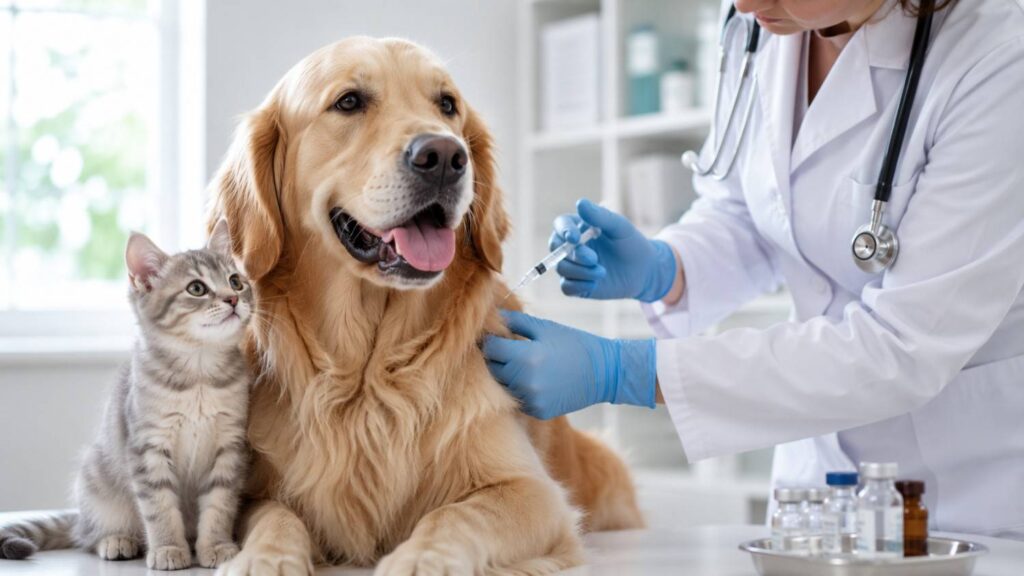
Top 5 Vaccines Every Pet Needs: A Dog and Cat Guide
Vaccination is one of the most important components of preventive veterinary care. It prepares an animal’s immune system to recognise and respond to specific infectious organisms before natural exposure occurs. Although no vaccine can guarantee complete protection in every animal, appropriate vaccination can substantially reduce the risk of serious disease, minimise symptom severity, and help control the spread of infection among domestic animals and wildlife.
The subject of the Top 5 Vaccines Every Pet Needs can be confusing because dogs and cats require different vaccines. There is no single five-injection package that is suitable for every household pet. Instead, this guide focuses on five major vaccine categories that owners of domestic dogs and cats should understand. These include rabies vaccination for both species, two important canine vaccine categories, and two major feline vaccine categories.
A responsible vaccination plan begins with more than simply checking an animal’s age. Veterinarians also consider the pet’s previous medical records, current health, immune status, living arrangements, local disease patterns, travel, grooming, boarding, daycare attendance, outdoor activity, and exposure to unfamiliar animals. A city-dwelling dog that visits daycare may face different risks from a rural hunting dog, while an indoor-only cat may have different needs from a cat that roams outdoors.
This article explains the difference between core and non-core vaccines, outlines important vaccines for dogs and cats, describes common vaccination schedules, and provides practical safety advice. It is intended to help pet owners have more informed discussions with their veterinary professionals rather than replace individual medical guidance.
What Do Core Vaccines for Pets Mean?
Veterinary vaccination guidelines commonly divide vaccines into two categories: core and non-core. This classification helps veterinarians create an effective plan without giving every available vaccine to every animal. Core vaccines are generally recommended for most or all pets of a particular species because they protect against diseases that are widespread, highly contagious, potentially fatal, transmissible to humans, or difficult to control once introduced into a community. Non-core vaccines are selected according to an individual animal’s lifestyle and exposure risk.
Understanding these categories is important because the word “core” does not mean that the same vaccine must be given every year. Some core vaccines require annual boosters, while others may be administered at three-year intervals after the initial series has been completed. Booster timing depends on the vaccine formulation, manufacturer instructions, legal requirements, age, health status, and previous vaccination records.
Non-core does not mean unnecessary or unimportant. A non-core vaccine may be essential for a particular pet if that animal regularly encounters a specific disease risk. For example, a boarding facility may require protection against respiratory infections, while an outdoor cat may require continued protection against feline leukemia virus.
The most effective approach combines established veterinary guidelines with an individual risk assessment. Pet owners should therefore avoid selecting vaccines only from online checklists. Instead, they should discuss changes in lifestyle, travel, housing, social contact, and health with their veterinarian during every wellness examination. These factors may change over time, meaning a vaccine that was unnecessary last year could become appropriate this year.
Core Vaccines Protect Against Major Disease Risks
Core vaccines target diseases considered sufficiently dangerous or widespread that protection is generally recommended for all animals of a particular species unless a medical reason prevents vaccination. For dogs, recognised core vaccine recommendations commonly include protection against canine distemper virus, canine adenovirus, canine parvovirus, leptospirosis, and rabies. For cats, core recommendations generally include feline panleukopenia virus, feline herpesvirus, feline calicivirus, and rabies. Feline leukemia vaccination is also considered particularly important for kittens and young cats because they are more vulnerable to infection.
These diseases can cause severe respiratory, gastrointestinal, neurological, liver, kidney, or immune-system complications. Some infections spread readily through direct contact, while others can be transmitted through contaminated environments, body fluids, wildlife, or standing water. Rabies is especially significant because it can infect people and is almost always fatal after symptoms develop.
Core vaccine recommendations are designed to protect both individual pets and the wider animal population. When a high percentage of pets are appropriately vaccinated, infectious organisms have fewer opportunities to circulate. However, vaccination plans must still account for the pet’s health, previous adverse reactions, medication use, and legal requirements. A veterinarian may delay, modify, or avoid a vaccine when the medical risks outweigh the expected benefit.
Non-Core Vaccines Depend on Lifestyle and Location
Non-core vaccines are recommended when a pet’s lifestyle, environment, location, or daily activities create a meaningful risk of exposure. They are not automatically required for every animal, but they can be highly important for individual pets. For example, dogs that attend daycare, visit dog parks, enter grooming salons, compete in shows, or stay in boarding kennels may be considered for Bordetella or canine influenza vaccination because these environments involve close contact with other dogs.
A dog that spends time in wooded or tick-heavy areas may be assessed for Lyme disease vaccination, while a cat that goes outdoors or lives with cats of unknown feline leukemia status may need continued FeLV protection. Geographic location also matters because some diseases are more common in certain climates, wildlife populations, or regions.
Indoor living reduces some risks but does not eliminate them. Pets may escape, travel, visit veterinary hospitals, encounter bats or rodents, enter emergency boarding, or be exposed when a new animal joins the household. Risk can also change quickly after a house move or change in routine.
For this reason, veterinarians usually review non-core vaccine needs during annual wellness visits. Owners should provide accurate information about travel, boarding, outdoor activity, wildlife encounters, and social contact so recommendations reflect the pet’s actual circumstances rather than assumptions based only on breed or age.
| Vaccine Type | Who Usually Needs It | Main Purpose | Examples |
|---|---|---|---|
| Core Vaccines | Nearly all dogs or cats unless a veterinarian advises otherwise | Protect against serious, widespread, or legally significant diseases | Rabies, DAPP/DHPP (dogs), FVRCP (cats), Leptospirosis (dogs), FeLV for kittens |
| Non-Core Vaccines | Pets with specific lifestyle or environmental risks | Provide additional protection based on exposure risk | Bordetella, Canine Influenza, Lyme Disease, FeLV for some adult cats |
| Risk Assessment | Determined during a veterinary examination | Helps select only the vaccines appropriate for the pet’s age, health, and lifestyle | Boarding, outdoor access, travel, wildlife exposure, multi-pet households |
| Booster Needs | Vary by vaccine and manufacturer guidelines | Maintain long-term immunity | Some vaccines require annual boosters, while others may be given every three years |
Which Vaccines Are Essential for Dogs?
A comprehensive dog vaccination plan is usually built around three major vaccine categories: rabies, the DAPP or DHPP combination, and leptospirosis. Together, these vaccines address several of the most serious infectious threats to canine health. Depending on the dog’s lifestyle, a veterinarian may also recommend additional protection against Bordetella, canine influenza, Lyme disease, or other regional conditions. These additional vaccines are selected through risk assessment rather than automatically administered to every dog.
The dog’s age strongly affects the schedule. Puppies require a sequence of vaccines because antibodies received from their mothers may interfere with their ability to develop reliable immunity after an early dose. Repeating vaccines at planned intervals improves the likelihood that the puppy will respond once maternal antibodies decline. Adult dogs with documented vaccination histories usually follow a booster schedule based on the vaccine type, while dogs with incomplete or unknown records may need a catch-up plan.
Lifestyle is equally important. A dog that rarely leaves a private home may face different exposure risks from a dog that attends daycare, swims in ponds, travels internationally, hunts, hikes, or regularly interacts with wildlife. However, owners should not assume that urban or indoor lifestyles eliminate infectious disease risks. Rodents, contaminated water, unexpected animal contact, and travel can all create exposure.
The following three vaccine categories form the foundation of canine preventive vaccination. Each protects against different organisms, follows a different schedule, and requires professional assessment. Owners should maintain accurate records and discuss any missed doses, previous reactions, or health changes with their veterinarian before vaccination.
1. Rabies Vaccine for Dogs
Rabies is a viral disease that affects the nervous system of mammals, including dogs, cats, wildlife, and humans. It is transmitted primarily through the saliva of an infected animal, usually following a bite. Once clinical symptoms appear, rabies is almost always fatal. This makes prevention through vaccination exceptionally important for both animal health and public safety.
Rabies vaccination requirements vary between countries, states, provinces, and local authorities. Some jurisdictions require all dogs to remain continuously vaccinated, while others specify the age at which the first dose must be given and how frequently boosters are required. Available products may be licensed for one-year or three-year protection, but local law can determine the legally recognised interval.
Even dogs that spend most of their time indoors may encounter bats, escaped wildlife, or unfamiliar animals. A current rabies certificate may also be required for licensing, boarding, relocation, international travel, or entry into certain facilities.
Owners should store the certificate safely and avoid relying on memory when checking due dates. After a possible exposure, veterinary and public-health authorities may make decisions based partly on the dog’s documented vaccination status. Any bite or wildlife encounter should therefore be reported promptly, even when the animal appears healthy.
2. DAPP or DHPP Vaccine for Dogs
DAPP and DHPP are abbreviations used for combination vaccines that commonly protect dogs against canine distemper virus, canine adenovirus, canine parvovirus, and, in some formulations, canine parainfluenza virus. The exact combination can vary between manufacturers, so owners should review the product recorded in the veterinary file rather than assuming every vaccine with a similar abbreviation contains identical components.
Canine distemper can affect the respiratory, gastrointestinal, and nervous systems. Adenovirus vaccination protects against infectious canine hepatitis, while parvovirus can cause severe vomiting, diarrhoea, dehydration, and life-threatening illness, particularly in young puppies. These infections can spread quickly, and some organisms can remain in contaminated environments for extended periods.
Puppies usually receive a sequence of DAPP or DHPP doses beginning at approximately six to eight weeks of age. Vaccination is repeated every two to four weeks until at least sixteen weeks because maternal antibodies can interfere with earlier doses. A booster is then generally given within one year, followed by longer intervals according to veterinary guidance.
Until the initial series is complete, puppies should avoid high-risk locations where large numbers of unknown or unvaccinated dogs gather. Safe socialisation remains important, but it should be planned carefully with professional advice.
3. Leptospirosis Vaccine for Dogs
Leptospirosis is a bacterial disease caused by organisms from the Leptospira group. Dogs can become exposed through water, soil, mud, food, or surfaces contaminated with the urine of infected animals. Rodents, wildlife, livestock, and other mammals may carry the bacteria. Infection can damage the kidneys and liver, and some affected dogs develop severe, rapidly progressing illness.
The disease is also significant because certain Leptospira strains can infect humans. Good hygiene, safe handling of urine, environmental management, and vaccination all contribute to risk reduction. Current canine vaccination guidance classifies leptospirosis vaccination as core because exposure is not limited to rural or hunting dogs.
Urban dogs may encounter contaminated puddles, gardens, parks, drains, rodents, or standing water. Therefore, a dog does not need to swim in a lake or live on a farm to face potential exposure.
The initial leptospirosis vaccination course generally requires two doses given several weeks apart. A booster is commonly administered within one year, followed by annual revaccination because protection is shorter than that provided by some viral vaccines. Owners should complete both initial doses, as a single injection may not provide adequate protection. Any history of previous vaccine reactions or chronic disease should be discussed before the appointment.
Which Vaccines Are Essential for Cats?
A well-designed cat vaccination plan typically focuses on rabies protection, the FVRCP combination vaccine, and feline leukemia virus vaccination where appropriate. Although many cats live exclusively indoors, indoor status does not remove every infectious disease risk. Cats may escape, encounter bats or rodents, enter boarding facilities, visit veterinary clinics, or come into contact with new animals introduced into the household.
Age is a major consideration. Kittens are particularly vulnerable because their immune systems are still developing, yet antibodies received from their mothers can temporarily interfere with vaccine responses. For this reason, kitten vaccinations are administered as a series rather than as a single appointment. Repeated doses help ensure that protection develops after maternal antibodies fall below interfering levels.
Adult cats require individual assessment based on their previous vaccine history, living arrangements, outdoor access, household composition, travel, and health. An indoor adult cat living alone may have different FeLV requirements from a young cat that goes outdoors or shares a home with cats of uncertain infection status.
Veterinarians also consider the type of vaccine, injection site, medical history, and any previous reactions. Keeping accurate records is especially important for cats because product intervals and lifestyle recommendations may change over time.
The following vaccine categories represent the foundation of feline preventive vaccination. They protect against important respiratory, gastrointestinal, immune-system, neurological, and public-health threats. Owners should work with a veterinarian to determine the most appropriate products and timing rather than assuming that every cat should follow an identical schedule.
4. FVRCP Vaccine for Cats
FVRCP is a combination vaccine that protects against feline viral rhinotracheitis, feline calicivirus, and feline panleukopenia. Rhinotracheitis is caused by feline herpesvirus type 1 and commonly affects the upper respiratory system and eyes. Calicivirus can cause respiratory symptoms, oral ulcers, fever, and, in some cases, more serious systemic disease. Panleukopenia is a highly contagious viral illness that can produce severe gastrointestinal disease, immune suppression, dehydration, and death, especially in kittens.
These vaccine components are considered core because the viruses are widely distributed and can cause significant illness. Feline herpesvirus and calicivirus vaccination may not always prevent infection completely, but it can reduce disease severity, complications, and transmission. Panleukopenia vaccination generally provides strong protection when the recommended series is completed.
Kittens commonly begin FVRCP vaccination at six to eight weeks of age. Doses are repeated every three to four weeks until approximately sixteen to twenty weeks, depending on veterinary guidance and individual risk.
Adult booster intervals vary according to previous vaccination, product instructions, and lifestyle. Even indoor cats benefit from core vaccine assessment because viruses can be introduced through escaped animals, contaminated materials, new pets, or unexpected boarding and veterinary visits.
Rabies Vaccine for Cats
Rabies vaccination is important for cats because they can encounter infected wildlife, particularly bats, even when they normally live indoors. Cats may also have unsupervised outdoor access, escape through open doors, or come into contact with wild animals that enter garages, balconies, roofs, or homes. Because rabies can infect humans and is nearly always fatal after symptoms develop, vaccination has both veterinary and public-health value.
Legal requirements differ by region. Some areas require rabies vaccination for all cats, while others base requirements on age, lifestyle, or local public-health rules. Veterinarians must also follow the licensed product instructions, which may specify different booster intervals.
A current rabies record can influence how authorities respond if a cat bites someone or is exposed to a potentially infected animal. It may also be required for travel, boarding, relocation, licensing, or entry into another country.
Owners should retain the vaccination certificate rather than relying only on a reminder card. If the cat has a history of vaccine reactions, chronic illness, or immune-related disease, the veterinarian may adjust the timing or monitoring plan. However, owners should not discontinue legally required vaccination without professional and regulatory guidance.
5. FeLV Vaccine for Kittens and At-Risk Cats
Feline leukemia virus, commonly abbreviated as FeLV, can weaken a cat’s immune system and contribute to anaemia, persistent infections, reproductive problems, and certain cancers. It spreads mainly through close contact with infected cats, particularly through saliva, mutual grooming, shared food and water bowls, bite wounds, and transmission from an infected mother to her kittens.
Kittens and young cats are more susceptible to persistent infection, which is why FeLV vaccination is considered particularly important during the early stages of life. The initial course generally consists of two doses administered several weeks apart. Testing is usually recommended before vaccination because the vaccine does not treat or benefit a cat that is already infected.
For adult cats, continued vaccination depends on exposure risk. Cats that go outdoors, fight, live with FeLV-positive cats, or regularly encounter cats of unknown status may require ongoing boosters. A low-risk indoor adult cat living in a stable household may not need continued vaccination after discussion with a veterinarian.
Vaccination should not replace testing, controlled introductions, and responsible household management. New cats should be tested before being introduced to other household cats, and owners should prevent unnecessary contact with animals whose FeLV status is unknown.
What Is the Recommended Pet Vaccination Schedule?
A pet vaccination schedule should be understood as a personalised clinical plan rather than a rigid timetable copied from the internet. While veterinary guidelines provide recommended starting ages and booster intervals, the final schedule depends on the pet’s species, health, previous records, vaccine product, lifestyle, local disease prevalence, and legal requirements. Two pets of the same age may receive different recommendations if their exposure risks or medical histories differ.
Puppies and kittens usually require several initial doses because maternally derived antibodies can interfere with vaccination. These antibodies help protect newborn animals, but they decline at unpredictable rates. A dose given too early may be blocked, while waiting too long could leave the animal vulnerable. A series of vaccines at planned intervals reduces this immunity gap.
Adult animals with complete records generally move to scheduled boosters. Some viral vaccines may provide protection for several years after the initial series, whereas bacterial vaccines such as leptospirosis commonly require annual revaccination. Rabies timing is influenced by both the vaccine licence and local law.
Animals with unknown histories should not automatically be treated as fully protected. Veterinarians may recommend a catch-up programme based on age and risk. Similarly, senior pets should not have vaccinations stopped simply because they are older. Their health, medication use, immune function, environment, and likely exposure must be assessed.
The table below summarises common approaches, but it cannot replace a veterinary examination or product-specific instructions.
| Life Stage | Common Vaccine Approach | Important Considerations |
|---|---|---|
| Puppies | DAPP or DHPP series from approximately 6–8 weeks; leptospirosis series often begins around 12 weeks; rabies according to law and product instructions | Maternal antibodies can interfere with early doses, so the entire series must be completed |
| Kittens | FVRCP every 3–4 weeks until approximately 16–20 weeks; initial FeLV series; rabies according to local rules | Young cats are vulnerable, and repeat doses improve the chance of developing reliable immunity |
| Adult pets | Boosters based on vaccine type, lifestyle, legal requirements and previous records | Some vaccines are given every three years, while others require annual administration |
| Senior pets | Individual plan based on health, exposure, medications and vaccination history | Age alone does not remove infection risk or automatically make vaccination unsafe |
Puppy Vaccination Schedule
Puppies commonly begin their DAPP or DHPP vaccination series between six and eight weeks of age. Further doses are normally given every two to four weeks until the puppy is at least sixteen weeks old. In higher-risk environments, a veterinarian may recommend continuing the series slightly longer to improve protection after maternal antibodies have declined.
Leptospirosis vaccination generally begins later than the first combination vaccine and requires two initial doses separated by several weeks. Rabies vaccination is administered according to local law and the minimum age stated on the product label.
Completing the entire series is essential. A puppy that receives only one early vaccine may not develop dependable protection because maternal antibodies could neutralise the vaccine response. Owners should also understand that immunity does not develop instantly after the final injection.
During the early vaccination period, puppies should avoid locations with uncontrolled exposure to unknown dogs or contaminated environments. However, complete isolation can interfere with behavioural development. Veterinarians can help owners arrange lower-risk socialisation through controlled meetings with healthy vaccinated dogs, clean training environments, and careful handling.
Accurate records should be retained for future boosters, boarding, training classes, licensing, and travel.
Kitten Vaccination Schedule
Kittens commonly start the FVRCP series at approximately six to eight weeks of age. Vaccination is repeated every three to four weeks until the kitten reaches around sixteen to twenty weeks, depending on the product, environment, and veterinarian’s assessment. Repeated dosing is necessary because maternal antibodies can remain present for different lengths of time in individual kittens.
The FeLV vaccine may be started from approximately eight weeks of age, depending on the licensed product. The initial course normally consists of two doses given several weeks apart. Testing for feline leukemia virus is recommended before vaccination, especially when the kitten’s background or maternal status is unknown.
Rabies vaccination follows local regulations and product instructions. Some regions specify a legal minimum age, while travel requirements may involve additional documentation or timing rules.
Kittens obtained from breeders, shelters, rescues, or private homes may arrive with incomplete records. Owners should bring every available document to the first veterinary appointment rather than assuming a previous vaccine was given correctly.
Until the initial series is complete, exposure to unfamiliar cats and high-risk environments should be controlled. New kittens should also be introduced gradually to existing household cats after appropriate health screening.
Adult and Senior Pet Boosters
Adult and senior pets require ongoing vaccination reviews even after completing their puppy or kitten series. The correct interval depends on the vaccine. Some core viral vaccines may be administered every three years after an appropriate initial series and booster, while vaccines such as leptospirosis often require annual revaccination. Lifestyle-based vaccines may also be needed annually when exposure continues.
Senior age alone is not a reason to stop vaccination. Older animals can still develop infectious diseases, particularly if they travel, board, go outdoors, encounter wildlife, or live with younger animals. However, age-related medical conditions, immune-system changes, medications, previous reactions, and reduced exposure may influence the final recommendation.
A veterinarian should review the pet’s health before vaccination. This may include a physical examination and, where appropriate, diagnostic testing. Vaccines may be postponed during significant illness or adjusted when the animal has a history of adverse reactions.
Owners should not restart or discontinue a vaccine series independently after a missed booster. The appropriate catch-up approach depends on the product, time overdue, disease risk, and legal requirements. Maintaining organised digital and paper records makes these decisions easier and prevents unnecessary duplication.
How Can You Make Pet Vaccination Safer?
Pet vaccination is generally considered safe, but it remains a medical procedure that should be planned and monitored carefully. Safety begins before the vaccine is administered. The veterinary team must confirm that the product has been stored correctly, is suitable for the species and age, and is given using the appropriate route and dosage. The veterinarian should also review the animal’s current health, medication use, previous reactions, pregnancy status, and vaccination history.
Owners contribute to safety by providing complete and accurate information. A recent change in appetite, vomiting, coughing, diarrhoea, fever, lethargy, or medication may affect whether vaccination should proceed. Previous swelling, hives, collapse, or breathing difficulty after a vaccine must always be reported, even if the reaction occurred years earlier or at another clinic.
After vaccination, mild effects such as tiredness, temporary appetite reduction, or tenderness may occur as the immune system responds. These symptoms usually resolve within a short period. However, more serious reactions require urgent veterinary attention.
Timing and observation also matter. Some pets benefit from remaining at the clinic briefly after vaccination, particularly when they have a history of allergic responses. Vaccines may be separated across visits in selected cases, although this decision should balance safety, disease exposure, stress, and the likelihood of completing the schedule.
The goal is not to avoid vaccination unnecessarily, but to maximise protection while reducing preventable risks through careful assessment, appropriate product selection, accurate administration, and prompt recognition of abnormal symptoms.
| Factor | Why It Matters | Effect on Vaccination Plan |
|---|---|---|
| Age | Puppies and kittens require initial vaccine series, while adults mainly receive boosters | Determines vaccine timing and dosage schedule |
| Vaccination History | Previous vaccines influence booster intervals | Prevents unnecessary repeat vaccinations |
| Lifestyle | Indoor, outdoor, travel, boarding, or daycare affect disease exposure | Helps identify required core and risk-based vaccines |
| Health Status | Illness, pregnancy, immune disorders, or previous vaccine reactions may require adjustments | Vaccination may be delayed, modified, or monitored more closely |
| Local Disease Risk | Some diseases are more common in certain regions | Determines whether additional vaccines are recommended |
| Legal Requirements | Rabies vaccination laws differ by location | Ensures compliance with local regulations and travel requirements |
Prepare for the Veterinary Appointment
Preparation helps the veterinarian make a safer and more accurate vaccination decision. Owners should bring all available vaccine certificates, adoption documents, breeder or shelter records, travel paperwork, and previous clinic reports. Even incomplete records can provide useful information about product names, dates, and previous reactions.
A current medication list is equally important. Include prescription drugs, supplements, parasite treatments, allergy medications, and any recent injections. Tell the veterinary team about chronic illnesses, pregnancy, immune-related conditions, recent surgery, appetite changes, coughing, vomiting, diarrhoea, fever, or unusual tiredness.
Lifestyle details should also be discussed. Mention daycare attendance, boarding, grooming, dog parks, outdoor roaming, wildlife contact, hunting, swimming, travel, and planned relocation. These factors may affect which non-core vaccines are recommended.
Owners should avoid giving human pain medication before or after the appointment unless specifically instructed by a veterinarian. Some common human medicines are dangerous to dogs and cats.
For anxious pets, ask the clinic about low-stress handling or pre-visit medication. Reducing fear can make examination and vaccination safer. Finally, confirm how long the pet should be observed afterward and who to contact if symptoms develop after normal clinic hours.
Know the Common Mild Side Effects
Mild post-vaccination effects occur because the immune system is responding to the vaccine. Common signs can include temporary tiredness, reduced activity, mild fever, decreased appetite, and tenderness or slight swelling at the injection site. Pets receiving an intranasal vaccine may briefly sneeze or develop mild nasal discharge.
These effects are usually limited and improve within a day or two. Owners should provide a quiet place to rest, access to fresh water, and normal food without forcing the pet to eat. Strenuous exercise, long journeys, grooming, or stressful events may be postponed until the animal returns to normal.
A small injection-site lump may occasionally remain for a period, but it should be monitored. Contact the veterinarian if the swelling becomes painful, increases in size, discharges fluid, or does not improve within the timeframe advised by the clinic.
Owners should record when symptoms began and how they progressed. Photographs or short videos may help the veterinary team assess swelling or behaviour.
Mild reactions should still be mentioned before future vaccinations because the information helps guide product selection, timing, and monitoring. Human painkillers, antihistamines, or anti-inflammatory medicines should never be given unless a veterinarian has provided a specific dose for that individual pet.
Recognise Signs That Need Urgent Care
Although serious vaccine reactions are uncommon, they can progress quickly and require immediate veterinary treatment. Warning signs include swelling of the face, muzzle, eyelids, or neck; difficulty breathing; widespread hives; repeated vomiting; severe diarrhoea; collapse; disorientation; pale gums; extreme weakness; or sudden inability to stand.
Owners should not wait for these symptoms to resolve without professional advice. Contact the veterinary clinic immediately or attend an emergency facility if the regular clinic is closed. Inform the team that the pet was recently vaccinated and provide the time, product information, and symptoms observed.
A previous severe reaction does not automatically mean the pet can never be vaccinated again. The veterinarian may recommend a different product, additional observation, pre-treatment, altered timing, or an individual risk-benefit assessment. In some cases, legally required vaccines may involve specific exemption procedures, but these depend on local regulations.
Keep a permanent written record of any reaction, including the vaccine brand, batch information when available, injection site, date, and treatment received. Share this history with every future veterinarian.
Prompt action can significantly improve outcomes, while accurate documentation helps reduce risk during subsequent preventive care.
Quick Answer About Top 5 Vaccines Every Pet Needs
The top five vaccine categories pet owners should understand are the rabies vaccine, the DAPP or DHPP combination vaccine for dogs, the leptospirosis vaccine for dogs, the FVRCP combination vaccine for cats, and the feline leukemia virus vaccine for kittens and cats with meaningful exposure risks. These vaccines protect against several serious viral and bacterial diseases that can cause severe illness, long-term complications, or death. Some, particularly rabies vaccination, may also be required by local law and play an important role in protecting human health.
However, the phrase Top 5 Vaccines Every Pet Needs does not mean that every dog and cat should receive all five products. Dogs do not receive feline vaccines, and cats do not receive canine combination vaccines. Even within the same species, the most appropriate schedule depends on the pet’s age, previous vaccination history, health status, environment, travel plans, boarding habits, outdoor access, and contact with other animals.
A veterinarian should review these factors before recommending vaccinations. Puppies and kittens usually require an initial series of doses because antibodies received from their mothers can interfere with early vaccine responses. Adult pets may need boosters annually or every three years, depending on the vaccine and local regulations. Senior pets also require individual assessment rather than automatic discontinuation of vaccination. The safest approach is therefore a personalised preventive care plan based on current veterinary guidelines.
Frequently Asked Questions
Pet owners often have questions about which vaccinations are truly necessary, how often boosters should be given, and whether indoor or senior animals still need protection. These concerns are understandable because vaccination guidance can appear complicated, particularly when different products follow different schedules.
The most important principle is that vaccination should be individualised. Core vaccines are broadly recommended because they protect against serious or widespread diseases, but lifestyle-based vaccines depend on exposure. A pet’s age, species, health, environment, travel, social contact, and previous records must all be considered.
Owners should also distinguish between vaccination and complete disease prevention. Vaccines reduce risk and may limit disease severity, but they do not replace hygiene, parasite control, testing, responsible introductions, or safe management. A vaccinated animal can still become exposed, and no medical product produces an identical immune response in every patient.
Questions about missed boosters, previous reactions, chronic illness, or unknown records should be addressed by a veterinarian rather than answered through guesswork. Restarting or discontinuing a vaccine series without guidance may leave a pet inadequately protected or result in unnecessary doses.
The following answers address common search questions about the Top 5 Vaccines Every Pet Needs. They provide general educational guidance but should not be treated as a substitute for an individual veterinary examination, local legal advice, or product-specific instructions.
What Are the Most Important Vaccines for Dogs and Cats?
The most important vaccines depend on the animal’s species. Dogs generally require protection against rabies, canine distemper, adenovirus, parvovirus, and leptospirosis. Distemper, adenovirus, and parvovirus are commonly combined in a DAPP or DHPP vaccine. Cats generally require rabies vaccination and the FVRCP combination, which protects against feline herpesvirus, calicivirus, and panleukopenia. Feline leukemia vaccination is especially important for kittens, young cats, and adults with relevant exposure risks.
These recommendations are often described as core vaccines because they address diseases that are severe, widespread, highly contagious, or important to public health. However, the exact schedule depends on age, health, previous records, lifestyle, location, and local law.
Additional vaccines may become necessary for individual animals. For example, boarding or daycare dogs may need respiratory disease protection, while outdoor cats may require continued FeLV vaccination.
The best plan is therefore not a universal list of injections but a species-specific programme developed with a veterinarian. Owners should review the plan annually because travel, housing, social contact, and local disease risk can change.
Do Indoor Cats Still Need Vaccinations?
Indoor cats still need regular vaccination assessment because living indoors reduces exposure but does not eliminate it. A cat may escape through an open door, encounter a bat inside the home, visit a veterinary clinic, enter a boarding facility, or come into contact with a newly adopted cat. Infectious organisms can also be introduced through contaminated objects, clothing, carriers, or footwear.
Core vaccines such as FVRCP and rabies are therefore commonly recommended for indoor cats according to age, medical history, vaccine type, and local legal requirements. Rabies vaccination may be legally required even when the cat never intentionally goes outdoors.
FeLV vaccination is handled differently. It is particularly recommended for kittens and young cats, while continued vaccination in adults depends on the likelihood of contact with infected cats or cats of unknown status.
Owners should provide an honest description of the cat’s lifestyle. A screened balcony, occasional garden access, travel, fostering, or the introduction of new animals can change the risk category.
Indoor status should be treated as one part of the assessment rather than a reason to discontinue preventive care automatically.
Does Every Dog Need the Leptospirosis Vaccine?
Current canine vaccination guidance commonly classifies leptospirosis vaccination as core for dogs because exposure can occur in a wide range of environments. The bacteria are spread through urine from infected animals and may contaminate water, mud, soil, gardens, parks, drains, and other outdoor areas.
Many owners associate leptospirosis only with rural dogs, farms, hunting, or swimming in lakes. However, urban dogs can also encounter rodents, puddles, shared outdoor spaces, and contaminated standing water. This makes lifestyle-based assumptions unreliable.
The initial leptospirosis vaccine course generally requires two doses given several weeks apart, followed by regular boosters, commonly every year. Completing both initial doses is important because one injection may not create dependable protection.
A veterinarian should still assess the dog’s individual health, previous vaccine reactions, age, medication use, and local disease patterns before administration. No vaccine decision should ignore medical contraindications.
Leptospirosis can cause serious kidney and liver disease, and some strains can infect humans. Vaccination should therefore be combined with measures such as controlling rodent exposure, avoiding stagnant water, and using care when handling urine from an unwell dog.
Does My Adult Cat Need the FeLV Vaccine?
Whether an adult cat needs continued feline leukemia virus vaccination depends primarily on exposure risk. Cats that go outdoors, fight, live with FeLV-positive cats, share a household with cats of unknown status, or frequently encounter unfamiliar cats may benefit from ongoing vaccination.
Adult cats living exclusively indoors in a stable household with tested FeLV-negative companions may be considered lower risk. In these cases, continued vaccination may not always be necessary after the initial kitten or young-cat series. The final decision should be made with a veterinarian after reviewing the cat’s actual lifestyle.
Testing remains important because vaccination does not treat an existing infection. New cats should be tested before introduction into a household, especially when other cats are present. Vaccination should also be combined with controlled introductions and prevention of aggressive contact.
Lifestyle can change unexpectedly. A previously indoor cat may begin going outside, move into a multi-cat household, or require boarding. For this reason, FeLV risk should be reviewed during routine wellness visits.
Owners should not assume that a previous vaccine provides lifelong protection. Booster timing depends on product instructions, age, exposure, and veterinary recommendations.
What Happens If My Pet Misses a Booster?
A missed booster does not always mean that the entire vaccine series must be restarted. The correct response depends on which vaccine is overdue, how much time has passed, the pet’s age, previous vaccination history, product instructions, disease exposure, and local legal requirements.
Owners should contact their veterinarian and provide the most complete records available. For some vaccines, a single booster may restore the schedule. Other products, particularly those requiring a two-dose initial series, may need a different catch-up approach when the interval has been significantly exceeded.
Rabies vaccination requires special attention because legal status may depend on the date and recognised booster interval. A pet that is overdue may be treated differently after a bite or wildlife exposure.
Until the vaccination status has been reviewed, owners should reduce avoidable exposure to high-risk environments such as boarding facilities, dog parks, unfamiliar animals, or contaminated outdoor areas.
Do not administer duplicate vaccines at different clinics without sharing records. Similarly, do not assume that an overdue pet remains fully protected.
A veterinarian can review the history, assess current health, and create a safe catch-up plan without unnecessary repetition.
Can Several Vaccines Be Given at One Appointment?
Several vaccines may be given during the same appointment when the veterinarian considers this appropriate. Combining necessary vaccinations can reduce repeated travel, improve schedule completion, and limit the number of stressful visits. Healthy puppies, kittens, and adults frequently receive more than one vaccine during routine preventive appointments.
However, the decision should be individualised. Veterinarians consider age, body size, health status, previous reactions, number of products required, urgency of protection, and expected exposure. A pet with a history of significant vaccine reactions may benefit from separating certain products, changing formulations, or remaining under observation for longer.
Spacing vaccines across multiple visits is not automatically safer in every situation. Delaying a necessary vaccine may prolong vulnerability to infection, and repeated appointments can create additional stress. The risks and benefits must therefore be balanced.
Owners should tell the veterinarian about every previous reaction, even when symptoms were mild. They should also ask which vaccines are being given and request an updated certificate.
After the appointment, monitor the pet according to the clinic’s instructions and seek urgent care if facial swelling, breathing difficulty, collapse, repeated vomiting, or severe weakness occurs.
Are Pet Vaccines Completely Effective?
No vaccine provides complete protection in every animal. Vaccine effectiveness depends on several factors, including the pet’s age, immune health, vaccine formulation, storage, administration, previous doses, maternal antibodies, and the intensity of disease exposure.
Some vaccines are highly effective at preventing clinical illness, while others are more effective at reducing symptom severity, complications, or pathogen shedding. Respiratory vaccines, for example, may not prevent every infection but can reduce the likelihood of severe disease.
A small number of vaccinated animals may fail to develop adequate immunity. This can occur because of immune-system disorders, interfering antibodies, incorrect timing, or overwhelming exposure. For this reason, vaccination should form part of a broader preventive health strategy.
Owners should continue using appropriate hygiene, parasite control, safe socialisation, testing, controlled introductions, and environmental management. Vaccinated pets should not be deliberately exposed to sick animals.
The fact that vaccines are not perfect does not make them ineffective. Their purpose is to lower risk substantially at both the individual and population levels. A veterinarian can explain the expected benefits and limitations of each product included in the pet’s health plan.
Conclusion
Understanding the Top 5 Vaccines Every Pet Needs helps owners make more informed decisions about preventive veterinary care. For dogs, the main vaccine categories are rabies, DAPP or DHPP, and leptospirosis. For cats, the essential categories include rabies, FVRCP, and feline leukemia vaccination for kittens, young cats, and adults with relevant exposure risks.
These recommendations should not be interpreted as a single universal package. Dogs and cats receive different products, and booster schedules vary according to age, vaccine type, medical history, lifestyle, location, and legal requirements. Puppies and kittens usually need repeated initial doses because maternal antibodies can interfere with early vaccination. Adults and senior pets require regular reviews rather than automatic annual administration or complete discontinuation.
Vaccination works best as part of a broader preventive care plan. Owners should combine it with routine examinations, parasite control, appropriate testing, good hygiene, responsible social contact, and prompt veterinary attention when illness develops.
Maintaining accurate records is equally important. A complete vaccination history supports safer booster decisions and may be required for licensing, travel, boarding, daycare, relocation, or response to a possible rabies exposure.
The most reliable next step is to ask a veterinarian to review the pet’s current records and lifestyle. A personalised plan provides meaningful protection without relying on unnecessary or unsuitable vaccinations.