
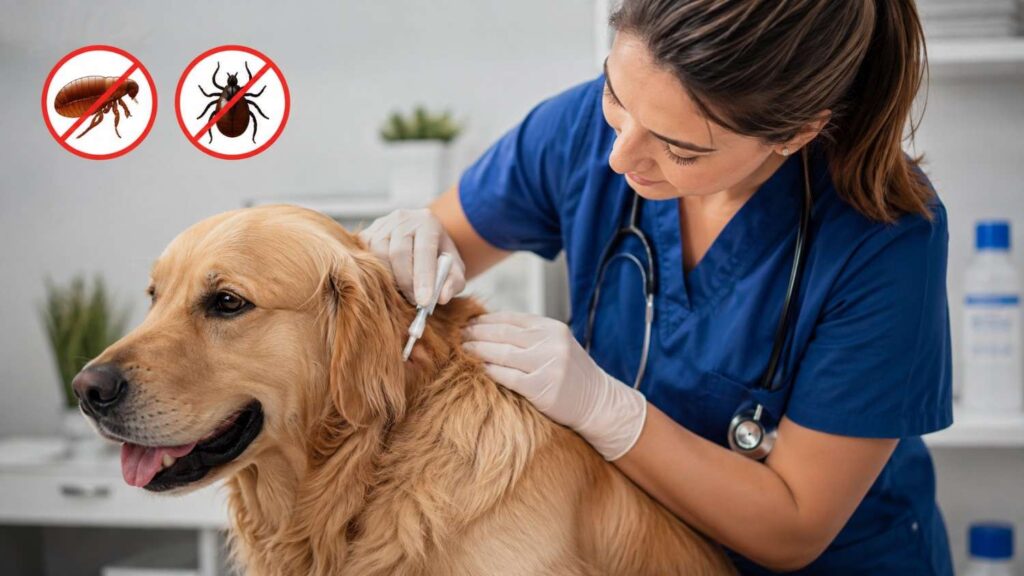
How to Treat Fleas and Ticks in Pets
Fleas and ticks are among the most common external parasites affecting companion animals. Although owners often first notice them because a pet begins scratching or because a tick becomes visible on the skin, their importance goes beyond temporary irritation. Fleas feed on blood and can cause itching, skin inflammation, flea allergy dermatitis, and, in severe infestations, clinically significant blood loss. Ticks can also irritate the skin while acting as vectors for several disease-causing organisms. FDA and AVMA guidance therefore treats flea and tick control as an important part of routine animal health management rather than simply a grooming concern.
The challenge is that flea and tick control is not one single action. Killing a few adult fleas today does not necessarily solve an infestation developing throughout the home. Similarly, removing one visible tick does not prevent another from attaching the next time an animal enters suitable tick habitat. Effective parasite management requires owners to consider the pet, the home environment, exposure patterns, treatment safety, and long-term prevention together.
For beginners, this means avoiding the temptation to purchase the first flea product available without reading its label. For experienced pet owners, it means reviewing prevention periodically as a pet’s weight, medical condition, lifestyle, travel, and environmental exposure change.
This guide explains how to treat fleas and ticks in pets using a structured approach based on current guidance from veterinary and public-health authorities. It covers signs of infestation, treatment methods, environmental flea management, correct tick removal, product safety, common mistakes, and prevention strategies so that owners can make better-informed decisions while knowing when professional veterinary care is appropriate.
How Can You Tell If Your Pet Has Fleas or Ticks?
Recognizing fleas and ticks early makes parasite control considerably easier because owners can begin appropriate treatment before the problem becomes more extensive. However, neither parasite is always obvious. Adult fleas move quickly through fur and may disappear before an owner gets a clear look. Ticks often attach in areas covered by thick hair or around small skin folds, making them easy to mistake for a scab, skin tag, or small lump.
For a broader overview of common flea and tick signs , this guide can help owners recognize problems that may otherwise be easy to miss.
Regular examination is therefore more reliable than waiting for obvious symptoms. Owners should become familiar with their pet’s normal coat and skin condition so that changes such as increased scratching, redness, hair loss, scabs, dark debris, or unusual bumps stand out quickly. Animals that spend time outdoors, live with multiple pets, visit boarding facilities, or regularly encounter wildlife may require particularly careful monitoring.
It is also important not to assume that scratching always confirms fleas. Allergies, mites, bacterial infections, fungal infections, and other skin conditions can cause similar signs. Likewise, not every small lump is a tick. When the cause is uncertain, a veterinarian can examine the skin and determine whether parasites or another dermatological condition are responsible.
The following signs provide useful starting points, but diagnosis should always consider the whole animal rather than relying on a single symptom.
Common Signs of Fleas
A pet with fleas may scratch, bite, chew, or lick its skin more frequently than usual. Some animals develop visible redness, small scabs, thinning hair, or irritated patches, particularly around areas they can easily reach. FDA notes that flea bites can trigger flea allergy dermatitis in sensitive dogs and cats, while persistent scratching can contribute to additional skin problems and hair loss. Severe flea infestations can also cause enough blood loss to contribute to anemia, particularly in vulnerable animals.
One useful home-checking method is to run a flea comb slowly through the coat, concentrating around the neck, back, abdomen, and base of the tail. Owners may find live fleas or dark material commonly called flea dirt. However, failing to see an adult flea does not rule out an infestation.
That is because fleas develop through several separate stages. CDC describes the flea life cycle as egg, larva, pupa, and adult, and environmental conditions influence how quickly those stages develop.
For that reason, persistent itching combined with suspicious debris or household flea activity deserves attention even when only one or two adult fleas are visible.
Flea and Tick Signs in Pets
| Parasite | Common Signs | Areas to Check | Key Identification Clues |
|---|---|---|---|
| Fleas | Scratching, biting, licking, irritated skin, hair loss | Neck, back, abdomen, base of tail | Fast-moving insects, flea dirt, dark particles in the coat |
| Ticks | Small bumps, skin irritation, unusual discomfort | Ears, eyelids, collar area, legs, toes, tail | Firmly attached parasite on or beneath the coat |
| Flea Infestation | Persistent itching, repeated scratching, skin irritation | Pet bedding, rugs, carpets, furniture | Flea eggs, larvae, pupae, and adult fleas may be present |
| Tick Exposure | Attached ticks or repeated tick findings | After walks, hikes, wooded or grassy areas | Crawling or attached ticks found during inspection |
Common Signs of Ticks
Ticks are usually identified by direct inspection rather than by itching alone. Once attached, a tick may appear as a small rounded or oval bump fixed firmly to the skin. Its size and appearance can change as it feeds, which means newly attached ticks may be far less obvious than larger, engorged ticks. Long, thick, or dark fur can make detection particularly difficult. CDC specifically notes that ticks crawling on or biting pets may be hard to see, especially on animals with long or dark coats.
A systematic examination works better than a quick glance over the back. Slowly run your fingers through the coat and inspect areas around the ears, eyelids, neck, collar, chest, legs, toes, groin, and tail. Look more carefully after walks through grass, vegetation, wooded areas, or other likely tick habitat.
CDC recommends checking pets that go outdoors daily for ticks. Regular checking benefits both the animal and household because a crawling tick can potentially be carried indoors before attaching elsewhere.
If a suspicious bump is firmly attached and you cannot confidently determine whether it is a tick or part of the pet’s skin, avoid pulling until you have looked closely or obtained veterinary help.
Why Early Treatment Matters
Early flea and tick management reduces the chance that a small parasite problem becomes a much larger animal-health or household-control issue. Fleas reproduce through a multi-stage life cycle, meaning adult fleas on the pet are only one component of an established infestation. Once eggs and developing stages accumulate throughout pet-resting areas, successful control can take sustained treatment rather than one isolated application. CDC advises beginning home treatment at the same time as pet treatment when eliminating fleas.
Ticks create a different concern because they may carry organisms capable of causing disease. AVMA identifies fleas and ticks as external parasites that can irritate pets and carry disease, while CDC advises routine tick-control measures and regular inspection of pets exposed outdoors.
Early action also helps owners notice whether the animal is reacting unusually to bites or treatment. Severe itching, substantial skin inflammation, weakness, loss of appetite, abnormal behavior, or other concerning signs should not simply be attributed to “normal fleas.”
The goal is therefore not panic when one parasite appears. It is prompt, proportionate action: confirm the problem, select appropriate treatment, examine other exposed animals, address the environment when necessary, and establish prevention before reinfestation occurs.
How to Treat Fleas and Ticks in Pets Effectively
Effective flea and tick treatment is a coordinated process rather than a single product application. The first step is determining exactly what parasite is present and whether the problem involves one animal, several pets, or the surrounding environment. From there, owners should select treatment according to the species, body weight, age, medical circumstances, and product label instead of assuming that all flea and tick medicines work the same way.
Available options may include topical products, oral medications, collars, sprays, shampoos, powders, or other veterinary parasite-control products. FDA notes that different flea and tick products use different approaches and active ingredients, and it strongly recommends involving a veterinarian in product selection, particularly when an animal has underlying health conditions.
For established flea problems, consistency matters because immature flea stages can continue developing away from the animal. Treating the pet while ignoring heavily contaminated bedding or carpeting allows new adults to emerge and restart the cycle. Tick management, meanwhile, depends heavily on prevention, inspection, and prompt physical removal of attached ticks.
Owners should also remember that “more” is not “better.” Doubling doses, combining products without veterinary direction, shortening treatment intervals, or using medication intended for another species can expose pets to unnecessary risk.
A structured approach therefore combines correct product selection, appropriate treatment of exposed household pets, environmental management, and continued prevention.
Choose a Product Appropriate for Your Pet
Choosing a flea or tick product should begin with the individual pet rather than with brand recognition. EPA’s current guidance states that flea and tick control products should be used only on the species and size or weight specified by the product label. Using a product formulated for a larger animal, increasing the dose, or applying a dog product to a cat can result in inappropriate pesticide exposure.
Before application, confirm your pet’s current weight and read the complete package label rather than relying only on the front of the box. Check minimum age requirements, species restrictions, weight range, application instructions, reapplication schedule, warnings, bathing guidance, and any cautions concerning sick, medicated, pregnant, nursing, elderly, or sensitive animals.
Veterinary involvement becomes even more valuable when several treatment options appear suitable. A veterinarian can consider parasite pressure in your region, previous reactions, other medications, existing illness, neurological history, and lifestyle before recommending an approach.
FDA also advises carefully reading product labels, package inserts, and accompanying information before use.
The objective is not simply to select the strongest product. It is to choose an effective treatment with a safety profile and dosing schedule appropriate for the specific animal.
Treat Other Pets When Appropriate
When fleas are confirmed on one animal, the other dogs or cats sharing the home should not automatically be considered unaffected. Fleas move between suitable hosts and develop throughout the environment, so treating only the visibly itchy animal may leave other hosts available for adult fleas. CAPC guidance states that when a flea infestation becomes established, achieving control requires treatment of every pet in the home with appropriate products.
That does not mean using the same medication on every animal. Each pet needs a product appropriate for its own species, weight, age, and health circumstances. A small cat, large dog, puppy, elderly dog, and chronically ill pet may require different treatment decisions even though they live in the same household.
This distinction is particularly important in mixed dog-and-cat homes. Never split a dog’s topical treatment between animals or apply leftover dog medication to a cat because the package appears similar. EPA specifically warns against interchanging dog and cat flea products.
Instead, think of household treatment as coordinated but individualized. Each appropriate animal receives suitable parasite protection at roughly the same stage of the control plan, while bedding and environmental measures are addressed simultaneously.
Control Fleas in the Home
Controlling fleas on the pet without addressing an established environmental infestation is one of the most common reasons owners believe treatment has “failed.” Adult fleas spend much of their feeding life on animal hosts, but flea development also involves eggs, larvae, and pupae in the surrounding environment. CDC explains that fleas pass through all four stages and that their life cycle can vary significantly with environmental conditions.
Begin household control at the same time as pet treatment. CDC specifically recommends synchronizing home and animal treatment because doing so helps disrupt the flea life cycle. Vacuum carpets, rugs, upholstered furniture, floor edges, cushions, and areas beneath furniture where pets rest. Wash pet bedding regularly and clean other washable fabrics heavily used by animals.
Expect control to require persistence rather than one cleaning session. Pupae are protected within cocoons, so developing fleas may continue emerging after treatment begins. CAPC notes that established infestations may take several months to bring under control.
For severe household infestations, a veterinarian can advise on pet treatment while a qualified pest-control professional can help assess appropriate environmental measures.
Which Flea and Tick Treatments Are Safe for Dogs and Cats?
There is no universal flea and tick treatment that can be described as the single safest choice for every dog or cat. Safety depends on multiple factors, including the pet’s species, current weight, age, medical conditions, neurological history, pregnancy or nursing status, medications, and previous reactions. The active ingredient, route of administration, dose, and treatment interval also matter.
Owners may encounter oral medications, topical spot-on treatments, collars, sprays, shampoos, or combination parasite products. Each category contains products with different indications and restrictions, so it is inappropriate to assume that one type is always safer than another.
Regulatory status also matters. Some flea and tick treatments are animal drugs regulated by FDA, while others are pesticide products regulated by EPA. Regardless of regulator, owners should follow the specific approved or registered label and avoid improvising the dose. FDA strongly recommends veterinary involvement when choosing flea and tick products, especially when the animal has other health concerns.
Cats deserve particular attention because some ingredients used in dog parasite products can be dangerous to them. Product selection should therefore always begin by confirming the species printed on the packaging.
Safety also means monitoring the pet after treatment. If unusual neurological signs, severe skin irritation, vomiting, weakness, breathing difficulty, or other concerning changes develop, contact a veterinarian promptly rather than automatically administering another dose or switching products without guidance.
Follow Species and Weight Instructions
Product labels are not general suggestions. They define which animals a flea or tick product is intended to treat and how it should be used. EPA’s updated guidance states that pet flea and tick pesticides should be used only on the animal species and size or weight specified by the label. It also warns that administering an amount intended for a larger animal may expose a smaller pet to excessive pesticide.
Accurate weight therefore matters. A dog that has gained or lost significant weight since its last veterinary visit may no longer belong in the same dosing category. Owners should also check whether the product has minimum-age restrictions before treating puppies or kittens.
Avoid estimating a partial dose from a package designed for a much larger animal unless a veterinarian and the product instructions specifically support that use. Similarly, do not shorten the labeled interval because fleas remain visible. Continuing emergence may reflect environmental stages rather than insufficient dosing.
EPA has specifically taken steps to emphasize clearer pet weight ranges on spot-on product packaging, reinforcing the importance of selecting the correct size category.
When the animal falls near a dosing boundary or has special health circumstances, ask a veterinarian which labeled product category is appropriate.
Be Especially Careful With Cats
Cats require special caution because their ability to metabolize certain chemicals differs from that of dogs. This is why packaging that looks like an ordinary flea treatment can still be dangerous if the product is intended only for dogs. EPA’s current flea and tick guidance explicitly states that dog products should never be applied to cats and vice versa because some pesticides are more toxic to one species.
The risk is especially important with certain dog spot-on products containing specific pyrethroid insecticides. EPA’s updated spot-on labeling information includes strong warnings that certain permethrin-, cyphenothrin-, and phenothrin-containing products must not be used on cats and may be fatal. Some labels also instruct owners to keep cats separated from recently treated dogs for a defined period.
For that reason, never decide a product is safe for a cat simply because it controls the same parasites or is sold beside cat products.
If a cat is accidentally exposed to a dog-only treatment, follow the product’s emergency instructions and contact a veterinarian promptly. Do not wait for severe symptoms before seeking advice.
In multi-pet homes, read both the treated dog’s label and the cat’s exposure warnings before allowing close grooming or physical contact.
Know About Possible Side Effects
Even correctly selected flea and tick products can occasionally cause adverse effects. The type of reaction depends on the product and animal, which is another reason owners should read the complete label before treatment and observe the pet afterwards.
One important example involves the isoxazoline class of flea and tick medications. FDA states that products in this class are considered safe and effective for dogs and cats, but neurologic adverse reactions have been reported in some animals. Reported reactions include muscle tremors, ataxia, and seizures, and FDA notes that events have occurred in animals both with and without a previous neurological history.
This does not mean that every pet should avoid isoxazoline products. FDA continues to recognize their safety and effectiveness for most animals while advising owners and veterinarians to consider the potential neurological risk when selecting treatment.
Before starting a new preventive, tell your veterinarian about previous seizures, tremors, medication reactions, chronic illnesses, and current medicines.
After treatment, follow the manufacturer’s monitoring and adverse-event instructions. Contact a veterinarian if the pet develops unusual neurological behavior, persistent vomiting, severe skin irritation, weakness, or another concerning reaction.
Related Articles
How Do You Remove a Tick From a Pet Safely?
Finding an attached tick can cause understandable concern, but the response should be calm and methodical. The objective is to remove the tick promptly while minimizing squeezing, twisting, or unnecessary manipulation. You do not need complicated household remedies, and delaying removal while attempting to make the tick “back out” is not recommended.
The basic removal method uses clean, fine-tipped tweezers. Although CDC’s detailed removal instructions are written for human tick bites, CDC also specifically advises removing ticks from pets and recommends routine tick checking for animals that go outdoors. The same mechanical principle of grasping near the skin and pulling steadily is widely used for attached ticks.
Before starting, part the pet’s fur until you can clearly see where the tick enters the skin. Good lighting is important, particularly with dark-coated animals. Keep the pet still enough to avoid sudden movement while the tick is being grasped.
Avoid crushing an attached tick, digging aggressively into the skin, or using methods such as petroleum jelly, nail polish, or heat. CDC specifically advises against these approaches when removing attached ticks.
After removal, check the rest of the animal carefully. Finding one tick means the pet has been in an environment where additional ticks may also have attached.
Use Fine-Tipped Tweezers
Begin by separating the fur around the tick so that you can see the attachment point clearly. Position clean, fine-tipped tweezers as close to the skin as practical and grasp the tick near its mouthparts rather than squeezing the swollen body. Once you have a secure grip, pull outward using steady, even pressure.
CDC and FDA both recommend this general technique for attached tick removal: grasp close to the skin and pull steadily rather than twisting or jerking. Sudden rotational movement can cause mouthparts to break off and remain embedded in the skin.
Do not burn the tick with a match, coat it with petroleum jelly, paint it with nail polish, or cover it with another substance in an attempt to make it detach. CDC specifically warns against petroleum jelly, heat, nail polish, and similar approaches.
If your pet will not remain still, the tick is positioned close to the eye, the attachment point is difficult to access, or you are uncomfortable performing the procedure, veterinary removal may be safer.
The key principle is simple: direct mechanical removal with controlled pressure is preferable to improvised chemical or heat-based methods.
Clean the Area After Removal
Once the tick has been removed, inspect it briefly to confirm that the visible body has come away. Do not crush the tick between bare fingers. CDC recommends disposing of live ticks by placing them in a sealed container or alcohol, wrapping them securely in tape, or flushing them away rather than crushing them manually.
Next, clean the pet’s skin around the attachment site using an approach recommended by your veterinarian or an appropriate pet-safe cleansing method. Wash your own hands thoroughly after handling the tick or contaminated materials. CDC’s general tick-removal guidance recommends cleaning both the bite area and hands after removal.
A small amount of local irritation may be visible at the attachment site, but owners should continue observing the area rather than repeatedly picking at it.
After completing removal, perform a complete tick check on the animal. Carefully inspect the ears, collar area, legs, toes, abdomen, tail, and other hidden areas.
It can also be useful to note the date and location where exposure likely occurred. If the animal subsequently becomes unwell, that information can help the veterinarian evaluate possible parasite-related illness.
Know When Veterinary Care Is Needed
Not every tick attachment requires an emergency veterinary visit, but certain situations deserve professional assessment. Contact a veterinarian if you cannot safely access or remove the tick, if part appears deeply embedded and the area becomes inflamed, or if the tick is located in a particularly sensitive area such as close to the eye or within the ear.
More importantly, monitor your pet’s overall condition after known tick exposure. Seek veterinary advice if the animal develops significant lethargy, weakness, reduced appetite, fever, unexplained lameness, neurological changes, unusual bleeding, or other new symptoms. These signs can have many causes, so owners should not attempt to diagnose a tick-borne disease based only on an internet checklist.
Ticks can transmit disease-causing organisms, but the risks vary considerably according to tick species, geographic area, season, and individual exposure. AVMA notes that ticks can carry diseases affecting pets, reinforcing the importance of preventive veterinary care.
If your pet regularly encounters ticks, discuss preventive products and regional disease risks with your veterinarian rather than relying entirely on manual removal.
Prompt removal is useful, but prevention and appropriate veterinary follow-up provide the more complete strategy.
How Can You Prevent Fleas and Ticks From Coming Back?
Long-term prevention is usually easier than repeatedly eliminating established flea infestations or removing ticks after every exposure. A good prevention plan addresses the animal’s lifestyle, local parasite pressure, household conditions, outdoor environment, and treatment schedule rather than relying on occasional treatment only when parasites become visible.
CAPC’s general parasite guidelines recommend year-round broad-spectrum parasite control that includes fleas and ticks. Its dedicated flea and tick guidance similarly supports continuous preventive strategies for dogs and cats.
A consistent prevention plan, along with guidance on appropriate products and routine checks, can help reduce the risk of recurring infestations; this detailed guide to flea and tick prevention explains the practical steps involved in keeping dogs protected.
However, a prevention plan still needs to be individualized. A dog that hikes frequently through wooded areas may have a different exposure profile from an elderly indoor cat. Pets that travel can also encounter parasites not commonly seen around their usual home environment. Your veterinarian can consider these differences when recommending prevention.
Environmental management provides another layer of control. Cleaning pet bedding, vacuuming regularly, reducing flea-friendly areas, and maintaining outdoor spaces can reduce opportunities for parasites to become established. Regular physical inspection remains important even when a preventive product is used because no strategy should encourage owners to stop observing the animal’s skin and coat.
The strongest approach combines dependable prevention, environmental hygiene, routine examination, and quick action when parasites appear. This reduces dependence on crisis treatment and helps owners identify emerging problems before infestations become difficult to control.
Maintain Consistent Parasite Prevention
Consistency is one of the most important elements of successful flea and tick prevention. A product only provides the protection described by its label when it is used according to the correct dose, route, and schedule. Delaying doses or repeatedly allowing protection to lapse can create opportunities for new fleas or ticks to infest the animal.
CAPC currently recommends year-round broad-spectrum parasite control that includes fleas and ticks as part of its general guidance for dogs and cats. Its flea guidance also notes that established infestations can take several months to control, which makes prevention particularly valuable compared with repeatedly responding after fleas become numerous.
Consistency does not mean continuing the same product forever without review. Reassess prevention if the pet gains or loses weight, begins new medication, develops a medical condition, starts traveling, moves to another region, or experiences a suspected adverse reaction.
Keep a simple treatment record so doses are not unintentionally missed or duplicated.
For prescription products, follow veterinary directions. For over-the-counter products, follow the complete label exactly.
The goal is predictable protection suited to the animal’s current circumstances, not simply applying parasite medication whenever scratching begins.
Keep the Pet’s Environment Clean
Environmental cleanliness plays an important role in flea prevention because developing flea stages can remain in locations where pets sleep, rest, and spend time. CDC advises frequent vacuuming of carpets, rugs, and upholstered surfaces and recommends regularly cleaning pet bedding with soap and water as part of flea prevention.
Focus cleaning where the animal actually lives rather than treating every surface equally. Pet beds, sofas, rugs, carpeting, floor edges, furniture cushions, carriers, and favorite sleeping areas deserve particular attention. Vacuuming should be repeated consistently when an infestation is active rather than performed once and forgotten.
Outdoor management can also reduce opportunities for tick encounters. CAPC recommends avoiding tick-infested areas when practical, while general tick-prevention guidance emphasizes reducing exposure and maintaining appropriate pet tick control.
Environmental control should complement, not replace, appropriate animal treatment. Cleaning alone will not reliably protect an exposed pet from future parasites, just as medication alone may not immediately eliminate a heavily established household flea population.For serious home infestations, coordinate veterinary parasite control with professional pest-management advice where necessary.A clean environment reduces parasite pressure and makes an appropriate prevention program more effective.
Flea and Tick Prevention Routine
| Prevention Area | Recommended Action | Main Purpose | Important Consideration |
|---|---|---|---|
| Pet Prevention | Maintain appropriate flea and tick control | Reduce future infestations | Choose products according to species, age, weight, and lifestyle |
| Tick Checks | Inspect pets regularly after outdoor activity | Detect attached ticks early | Pay special attention to ears, toes, legs, collar area, and tail |
| Bedding Care | Wash pet bedding regularly | Reduce environmental flea stages | Focus on areas where pets sleep or spend time |
| Home Cleaning | Vacuum carpets, rugs, furniture, and pet areas | Remove flea eggs and developing stages | Continue cleaning during an established infestation |
| Grooming | Regularly groom and inspect the coat | Support early parasite detection | Use a flea comb when fleas are suspected |
| Outdoor Maintenance | Mow grass, trim bushes, and remove brush | Reduce suitable tick habitat | Especially useful around frequently used outdoor areas |
| Veterinary Guidance | Review parasite-control needs with a veterinarian | Match prevention to individual risk | Consider health history, lifestyle, and local parasite exposure |
Check Pets After Outdoor Activities
Routine physical inspection remains useful even for pets receiving preventive treatment. Ticks may crawl through fur before attaching, and early detection allows owners to remove them from the animal or household environment quickly.
CDC recommends checking pets that go outdoors every day for ticks. It also notes that ticks can be difficult to identify on animals with long or dark fur, making a deliberate hands-on examination more effective than simply looking at the coat from a distance.
After walks, hikes, camping trips, garden activity, or exposure to wooded and grassy environments, run your fingers slowly over the animal’s skin and coat. Examine around the ears, eyelids, collar area, legs, toes, abdomen, groin, and tail. Check equipment such as harnesses and bedding when relevant.
This routine has a second benefit: it helps owners notice skin changes, wounds, lumps, or irritation that may have nothing to do with ticks.
For dogs that regularly enter higher-risk environments, discuss suitable tick prevention with a veterinarian instead of relying exclusively on manual inspections.
Think of tick checks as an additional safety layer. Preventive products reduce risk, while inspection provides an opportunity to identify and remove individual ticks that still reach the pet.
What Common Flea and Tick Treatment Mistakes Should You Avoid?
Many flea and tick control problems happen not because treatment options are unavailable, but because the overall strategy is incomplete. Owners may treat only one pet, stop after the first application, use the wrong weight category, overlook household flea stages, or assume that a product safe for dogs must also be safe for cats.
Another common problem is reacting to persistent fleas by increasing the dose or changing products too quickly. Continued flea sightings after treatment can occur because immature fleas in the home are still progressing through their life cycle. That does not automatically mean the original product failed. CAPC specifically notes that established flea infestations may take several months to control.
Product misuse creates a more serious risk. EPA repeatedly emphasizes following the species and weight restrictions on flea and tick pesticides.
Owners should also avoid relying on unproven household remedies when an effective veterinary treatment plan is needed. A pleasant-smelling spray or frequent bathing may temporarily remove some visible fleas but does not necessarily interrupt the complete flea life cycle.
The most reliable way to avoid these mistakes is to treat parasite control as a continuing health-management process: identify the parasite correctly, follow the label, coordinate household treatment, manage the environment, monitor results, and seek veterinary advice when the expected response does not occur.
Treating Only the Fleas You Can See
Seeing adult fleas creates the impression that removing those visible insects will solve the problem. Unfortunately, flea biology makes control more complicated. CDC identifies four flea stages: egg, larva, pupa, and adult. Only the adult stage normally seen moving through fur represents the immediately visible part of that cycle.
Once an infestation becomes established, eggs and developing stages may be distributed throughout areas where the pet rests. This means an animal can receive treatment and later encounter newly emerged adult fleas from the surrounding environment.
CDC recommends beginning home treatment at the same time as pet treatment specifically to help disrupt this life cycle.
Therefore, do not evaluate success solely by whether you see another flea the following day. Follow the treatment schedule, clean the environment consistently, and continue monitoring.
If fleas remain abundant despite correct treatment, consult a veterinarian. Factors such as incorrect application, untreated animals, environmental burden, missed doses, or another skin condition may need investigation.
The goal is lifecycle control rather than simply removing whichever adult fleas happen to be visible during one examination.
Using the Wrong Product or Dose
Incorrect product selection is one of the most avoidable flea and tick treatment risks. EPA guidance states clearly that flea and tick pesticides should only be used on the species and size or weight indicated by the label. Dog products should not be substituted for cat products, and owners should apply only the amount intended for their pet’s weight category.
Problems can occur when owners assume that using a larger dose will kill parasites faster, divide a large-animal treatment between several smaller pets, or reuse medication left over from another animal. Unless the product instructions and veterinarian specifically support that method, these practices can create dosing errors.
Check your pet’s weight before purchasing treatment and verify minimum-age requirements. Also review warnings concerning illness, pregnancy, nursing, medication use, and previous sensitivities.
Avoid combining several flea or tick products simply because they use different formats, such as a collar plus a topical medication. Multiple products may contain interacting or overlapping active ingredients.
When control seems inadequate, ask why before increasing treatment. Environmental fleas, poor application technique, missed doses, or untreated animals may be the real problem.
Correct dosing prioritizes both parasite control and animal safety.
Stopping Prevention Too Soon
Owners sometimes stop flea and tick prevention once scratching improves or adult fleas disappear. This can be a mistake, particularly when environmental flea stages remain active or the animal continues to encounter parasite habitat.
CAPC recommends year-round parasite control that includes fleas and ticks. Its flea guidance also emphasizes that an established infestation may require several months to bring under control.
Stopping prematurely can allow newly emerging adult fleas to find an untreated host, reproduce, and restart the household cycle. With ticks, ending protection while outdoor exposure continues leaves the animal vulnerable to new attachment.
Follow the product’s labeled schedule and your veterinarian’s prevention plan rather than deciding treatment intervals based only on visible parasites. Keep records or calendar reminders so doses are not accidentally delayed.
At the same time, do not extend use beyond label instructions or continue a product after a suspected adverse reaction without veterinary advice.
Successful parasite control requires consistency rather than aggressive dosing. A properly selected treatment used on schedule, combined with environmental management and routine inspection, usually provides a more rational strategy than repeatedly starting and stopping medication whenever parasites become noticeable.
Quick Answer About How to Treat Fleas and Ticks in Pets
Learning how to treat fleas and ticks in pets starts with understanding that visible parasites are only one part of the problem. Effective treatment usually combines an appropriately selected flea or tick product, consistent environmental control when fleas are present, regular inspection for ticks, and continued prevention. The treatment must match the animal’s species, size or weight, age, and other label restrictions. EPA guidance specifically warns against substituting dog products for cat products because some pesticide ingredients may be considerably more hazardous to cats.
For fleas, treating the animal alone may not eliminate an established household problem. Fleas pass through egg, larval, pupal, and adult stages, and immature stages can remain within carpets, bedding, furniture, floor edges, and other areas pets use. CDC therefore recommends beginning home-control measures at the same time as pet treatment when dealing with an infestation.
Ticks require a slightly different strategy. Pets that spend time outdoors should be checked regularly, with CDC recommending daily tick checks for animals that go outside. Attached ticks should be removed promptly and carefully rather than coated with household substances or left in place.
Most importantly, product choice should not depend solely on advertising or convenience. Discuss prevention with a veterinarian when the pet is very young, elderly, pregnant, nursing, taking medication, chronically ill, neurologically sensitive, or has reacted to parasite-control products before.
Frequently Asked Questions About Flea and Tick Treatment
Flea and tick questions often appear simple but can have different answers depending on the animal involved. A treatment suitable for a healthy adult dog may not be appropriate for a small kitten, elderly cat, pregnant animal, or pet with a neurological history. Likewise, the correct response to one newly discovered flea is different from managing a household where multiple animals have been infested for weeks.
The following answers therefore provide general guidance rather than individual veterinary prescriptions. They focus on questions owners commonly ask when they first discover fleas or ticks, including how quickly treatment works, whether the home needs treatment, whether dog products can be used on cats, and whether indoor pets still need protection.
Whenever a question involves an individual product, dose, combination of medications, or pet with an existing health problem, check the current product label and consult a veterinarian. FDA strongly recommends involving a veterinarian in flea and tick product selection, especially when the animal has other health conditions.
The same principle applies when symptoms seem more severe than an ordinary parasite problem. Persistent skin lesions, weakness, substantial lethargy, neurological changes, or suspected medication reactions deserve professional assessment.
These FAQs are designed to help owners understand the reasoning behind parasite control so they can make better decisions instead of relying on myths, guesswork, or one-size-fits-all treatment advice.
What kills fleas on pets quickly?
Several veterinary flea-control products are designed to kill adult fleas, but there is no single “fastest” option appropriate for every pet. FDA notes that flea and tick products are available in forms including oral medicines, collars, sprays, shampoos, powders, dips, and topical spot-on treatments. Different active ingredients work differently, so product choice should consider species, weight, age, medical history, and required duration of protection.
Owners should avoid choosing treatment solely because marketing promises rapid killing. Immediate reduction of adult fleas is useful, but long-term control also depends on preventing surviving or newly emerging fleas from continuing the life cycle.
When a household infestation exists, environmental treatment must occur alongside appropriate pet treatment. CDC specifically recommends starting both on the same timeline.
For a pet that is severely itchy, very young, weak, anemic, or heavily infested, contact a veterinarian rather than experimenting with several products.
The most effective approach is the fastest safe and appropriate option for that individual animal combined with a plan that prevents the flea population from rebuilding.
Should I treat my house if my pet has fleas?
If fleas are established on a pet, environmental control is usually an important part of the solution because flea development does not occur entirely on the animal. CDC explains that fleas pass through egg, larval, pupal, and adult stages. Developing stages can remain within the pet’s surroundings rather than staying permanently on the host.
CDC therefore advises beginning home treatment at the same time as pet treatment. Useful measures include regular vacuuming and cleaning pet bedding, carpets, rugs, upholstery, and other frequently used pet areas.
Do not assume one intensive cleaning session will immediately eliminate every flea. Pupae can remain protected within cocoons, which means new adult fleas may emerge as treatment continues.
For severe infestations, a professional pest-control service can help assess appropriate home or yard measures while a veterinarian manages treatment of the animals.
Most importantly, do not spray environmental pesticide products directly on pets unless the label specifically authorizes animal application.
Treating both the pet and its environment is generally more effective than repeatedly treating the animal while allowing the surrounding flea life cycle to continue.
Can I use dog flea medicine on a cat?
No dog flea or tick product should be applied to a cat unless the label specifically states that it is approved or registered for cats and provides appropriate cat dosing instructions. Similar-looking packages do not mean the formulations are interchangeable.
EPA’s current guidance explicitly warns owners never to apply dog flea and tick products to cats because certain pesticides have different toxicity profiles between species.
This is particularly important with some dog spot-on products containing pyrethroid insecticides. EPA labeling information includes warnings that certain permethrin-, cyphenothrin-, and phenothrin-containing dog products should not be used on cats and may be fatal.
In a household containing both dogs and cats, also check whether a dog’s topical treatment requires temporary separation from cats after application.
If a cat is accidentally exposed to a dog-only flea product, contact a veterinarian promptly and follow the product’s emergency instructions rather than waiting for obvious symptoms.
The safest rule is straightforward: match the product to the species, weight, and label exactly. Never improvise treatment because two pets share the same parasites.
Do indoor pets need flea and tick prevention?
Indoor living can reduce exposure to some parasites, but it does not automatically reduce risk to zero. Fleas or ticks may enter a home on other animals, clothing, belongings, visiting pets, or pets that spend even limited periods outdoors. Fleas can also persist in indoor environments once an infestation becomes established.
CDC recommends keeping up with flea and tick control as part of routine pet health care, while CAPC’s general guidance supports year-round parasite prevention for dogs and cats.
The exact prevention plan should still reflect the individual animal’s circumstances. A high-rise indoor cat with no contact with other animals may have a very different exposure profile from an indoor dog that walks outdoors several times every day.
Travel, boarding, grooming facilities, foster animals, household dogs, and wildlife exposure can also change risk.
Rather than assuming that “indoor” automatically means “no prevention,” discuss lifestyle with your veterinarian and determine what level of protection makes sense.
The goal is risk-based prevention. Indoor status is one factor, but species, household composition, geography, travel, and outdoor contact all contribute to the final decision.
How often should I check my dog for ticks?
CDC recommends checking pets that go outdoors daily for ticks. This is particularly valuable for dogs that walk through wooded, brushy, grassy, or other tick-prone environments.
A tick check should be deliberate rather than a quick glance. Run your hands over the dog’s body while separating the fur as needed. Pay close attention around the ears and eyelids, under the collar, between the legs, around the tail, and between the toes. Long or dark coats require additional care because small ticks can be difficult to see.
Inspecting the dog soon after outdoor activity can also identify crawling ticks before they attach or move into the home.
Daily checking does not replace an appropriate tick-control product when preventive medication is recommended. Instead, the two measures work together.
If you repeatedly find ticks despite using prevention according to the label, speak with your veterinarian. They can review application technique, dosing schedule, current weight, local parasite conditions, and whether another labeled strategy may be more suitable.
Regular inspection also gives owners an opportunity to notice unrelated wounds, skin irritation, or new lumps early.
Can flea and tick medicines cause side effects?
Yes. Although many flea and tick products are used safely, adverse reactions can occur. FDA advises owners to read product labels and accompanying information carefully and strongly recommends veterinary involvement when choosing treatment, particularly for pets with medical conditions.
The possible reaction depends on the product. One well-documented example concerns isoxazoline flea and tick drugs. FDA considers this class safe and effective for dogs and cats overall but states that neurologic reactions such as muscle tremors, ataxia, and seizures have been reported in some animals.
Owners should therefore tell their veterinarian about seizures, neurological problems, previous medication reactions, pregnancy, chronic illness, and other medications before starting a new parasite treatment.
After administering a product, observe the animal as directed by the label. Contact a veterinarian if concerning symptoms appear.
Do not automatically administer another parasite medicine to “counteract” a reaction or switch products without professional advice.
A potential side-effect warning does not mean a medication is unsuitable for every animal. It means treatment decisions should weigh parasite risks, product benefits, known warnings, and the individual pet’s medical history.
Conclusion
Learning how to treat fleas and ticks in pets requires a broader approach than simply killing the parasite that happens to be visible. Successful control begins with identifying the problem correctly, selecting a product designed for the pet’s species and weight, using it exactly according to its label, and addressing the environment when an established flea infestation is present. EPA’s current guidance strongly reinforces correct species and weight selection, while CDC emphasizes environmental flea control and regular tick checking.
For fleas, remember that adults are only one stage of a larger life cycle. Cleaning bedding, vacuuming frequently, treating appropriate household pets, and maintaining consistent prevention can help interrupt reinfestation. For ticks, routine checks after outdoor exposure and prompt removal using fine-tipped tweezers provide an important additional layer of protection.
Product safety deserves equal attention. Never assume a dog flea product can be used on a cat. Do not change doses, combine treatments, or shorten application intervals without label support or veterinary direction. If your pet has a history of seizures or other neurological problems, discuss medication choice with your veterinarian because FDA has identified potential neurological adverse reactions with isoxazoline-class products in some animals.
Most importantly, parasite management should be proactive. Consistent prevention, environmental hygiene, routine skin and coat checks, and veterinary guidance provide better long-term protection than repeatedly reacting after infestations become severe.