
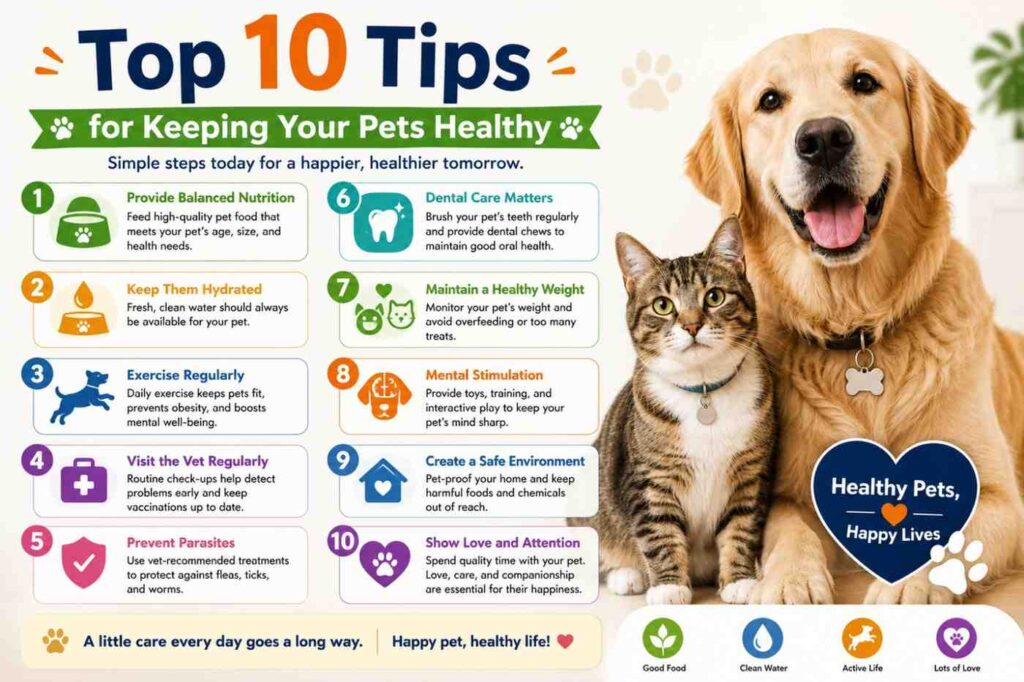
Top 10 Tips for Keeping Your Pets Healthy
Keeping pets healthy is not only about feeding them on time. Pets need a full care routine that includes food, water, exercise, vet care, grooming, dental care, safety, and love. Whether you have a dog, cat, rabbit, bird, or another pet, their health depends on the choices you make every day.
The Top 10 Tips for Keeping Your Pets Healthy can help you build a simple routine that is easy to follow. You do not need to make pet care complicated. Most health problems can be reduced with good habits, early attention, and regular support from a veterinarian.
This guide explains practical pet health tips in a clear and simple way. You will also find a helpful table, FAQs, source links, and a final checklist to make the article useful for readers and search engines.
Why Pet Health Should Be a Daily Priority
Pet health starts at home. Your pet spends most of its time with you, so daily care has a strong effect on its overall wellness. Food, water, hygiene, movement, sleep, and safety all work together. If one part of the routine is ignored, your pet may face health issues over time.
A healthy pet is usually more active, more relaxed, and easier to care for. Daily care also helps you notice small changes early. This is important because pets cannot tell us when they feel pain or discomfort. A change in appetite, energy, bathroom habits, or mood can be a sign that something needs attention.
Daily Habits Create Long-Term Pet Wellness
Small daily habits are the base of pet wellness. Feed your pet at regular times, provide clean water, offer safe exercise, and check their body for changes. These habits may look simple, but they help prevent many common problems.
A short daily check can include looking at your pet’s eyes, ears, coat, paws, teeth, and energy level. If your pet suddenly becomes quiet, refuses food, or hides more than usual, it may be time to call your vet.
Prevention Is Better Than Emergency Care
Preventive care is usually safer and easier than emergency treatment. Regular vet visits, vaccines, parasite control, dental care, and weight checks can reduce serious risks. Waiting until a pet becomes very sick can make treatment harder and more stressful.
That is why I recommend a simple prevention-first routine. It helps pet owners stay ahead of health problems instead of reacting late.
Top 10 Tips for Keeping Your Pets Healthy at Home
The Top 10 Tips for Keeping Your Pets Healthy are practical steps every pet owner can follow. These tips are not only for new pet owners. Even experienced owners can use them as a reminder to improve their pet care routine.
Home care is very important because it affects your pet every single day. A good routine helps support your pet’s body, mood, behavior, and comfort. The goal is not perfection. The goal is consistency.
1. Feed a Balanced Diet
A balanced diet gives your pet the nutrients needed for energy, growth, skin, coat, and immune support. Choose food based on your pet’s age, size, breed, and health needs. Puppies, kittens, adult pets, and senior pets often need different nutrition.
Always read pet food labels carefully. Look for feeding instructions, ingredients, and nutritional information. Avoid giving too many table scraps because they can upset digestion or create an unbalanced diet.
2. Provide Fresh Water Daily
Clean water is one of the easiest pet care tips, but it is also one of the most important. Pets need water for digestion, body temperature control, and normal organ function.
Wash water bowls often and refill them daily. If your pet does not drink enough, try placing water in a quiet area. Some cats prefer moving water from a pet fountain.
3. Keep a Regular Routine
Pets feel safer when they have a routine. Feeding time, walking time, playtime, sleep time, and bathroom habits should be steady where possible. A routine helps reduce stress and makes it easier to notice health changes.
For example, if your dog usually eats well but suddenly refuses food, you will notice quickly because you know their normal pattern.
Food, Nutrition, and Weight Management for Healthy Pets
Food has a direct impact on your pet’s health. Poor food choices can lead to weight gain, stomach issues, low energy, or long-term health problems. Good pet nutrition supports strength, digestion, skin, coat, teeth, and immune health.
Weight management is also important. Many pets become overweight because of large portions, too many treats, and low activity. A healthy weight helps protect joints, heart health, and overall comfort.
Choose the Right Food for Your Pet
Choose pet food that matches your pet’s species and life stage. Dogs and cats have different needs. A kitten should not eat adult cat food as a main diet, and a puppy may need different nutrition than a senior dog.
The FDA explains that pet food should be safe, made under sanitary conditions, free from harmful substances, and truthfully labeled. This is why checking labels and buying from trusted brands is important.
Control Treats and Portion Sizes
Treats should be used carefully. They are useful for training, but they should not become a major part of your pet’s diet. Too many treats can add extra calories and lead to weight gain.
Use small treats and follow your vet’s advice about portion size. If your pet is gaining weight, do not guess. Ask your vet for a safe feeding plan.
Avoid Unsafe Human Foods
Some human foods are dangerous for pets. Chocolate, grapes, raisins, onions, garlic, alcohol, caffeine, and xylitol can be harmful. The ASPCA lists many people foods that pet owners should avoid giving to pets.
If your pet eats something unsafe, contact your veterinarian or poison control support quickly. Do not wait for serious symptoms.
Veterinary Care, Vaccines, and Parasite Prevention
Veterinary care is one of the most important parts of the Top 10 Tips for Keeping Your Pets Healthy. A veterinarian can find problems that may not be visible at home. They can also guide you on vaccines, parasite prevention, nutrition, dental health, and behavior.
Vet care should not only happen during emergencies. Routine exams are a smart way to protect your pet’s long-term health. Preventive care gives your pet a better chance of staying healthy and comfortable.
Schedule Regular Vet Checkups
Regular vet checkups help detect health issues early. Your vet may check your pet’s weight, teeth, skin, ears, eyes, heart, joints, and overall condition. These visits are also a good time to ask questions about food, behavior, and daily care.
The CDC says regular veterinary visits are important for keeping pets and families healthy. Vet care can also help with vaccines, deworming, flea control, and tick control.
Keep Vaccines Up to Date
Vaccines help protect pets from serious diseases. The right vaccine plan depends on your pet’s age, lifestyle, location, and health condition. Pets that go outside, visit groomers, stay at boarding centers, or meet other animals may have different vaccine needs.
Your veterinarian can explain which vaccines are needed and when they should be given.
Use Parasite Prevention Safely
Fleas, ticks, mites, heartworms, and intestinal worms can cause serious discomfort and disease. Some parasites can also affect people. That is why parasite prevention is important for both pet health and family safety.
Always use products recommended by your vet. Never use dog flea medicine on a cat unless your vet confirms it is safe.
Exercise and Mental Stimulation for Pets
Exercise is not only for weight control. It also supports mood, muscles, joints, digestion, and behavior. Pets that do not get enough movement may become bored, anxious, overweight, or destructive.
Mental stimulation is just as important. Pets need activities that keep their minds busy. Toys, puzzles, training, safe exploring, and playtime can help your pet stay happy and alert.
Match Activity to Age and Breed
Every pet has different exercise needs. A young active dog may need long walks and play. A senior dog may need short and gentle walks. Cats may enjoy short play sessions with feather toys, tunnels, or climbing spaces.
Do not force heavy activity if your pet is tired, overweight, injured, or has breathing problems. Ask your vet for safe exercise advice.
Make Play Part of Daily Care
Play helps pets release energy and reduce boredom. Dogs may enjoy fetch, tug toys, scent games, and basic training. Cats may enjoy chase toys, puzzle feeders, scratching posts, and climbing trees.
Even 10 to 15 minutes of focused play can make a big difference in your pet’s day.
Watch for Tiredness or Pain
Exercise should help your pet, not harm them. Stop activity if your pet limps, coughs, pants heavily, refuses to move, or seems weak. These signs can point to pain, overheating, or another health issue.
Always give water and rest after active play or outdoor walks.
Dental Care, Grooming, and Hygiene
Dental care and grooming are not only about appearance. They are important parts of pet health. Teeth, gums, skin, coat, ears, and nails can show signs of illness before other symptoms become obvious.
Good hygiene also helps keep your home cleaner and safer. A well-groomed pet is often more comfortable, especially if they have long hair, sensitive skin, or fast-growing nails.
Brush Your Pet’s Teeth
Dental care for pets helps reduce plaque, bad breath, gum problems, and mouth pain. The AVMA says periodontal disease is common in dogs and cats, and many pets show early signs by age three.
Use only pet-safe toothpaste. Human toothpaste can contain ingredients that are not safe for pets. Start slowly and reward your pet after brushing.
Groom According to Coat Type
Different pets need different grooming routines. Short-haired pets may need light brushing. Long-haired pets may need frequent brushing to avoid mats. Mats can pull the skin and cause pain.
Grooming also helps you find fleas, ticks, wounds, lumps, or dry skin early. This makes it more than a beauty task. It is a health check.
Trim Nails and Check Ears
Long nails can make walking uncomfortable. Trim nails carefully or ask a groomer or vet for help. If your pet’s ears smell bad, look red, or your pet keeps scratching them, there may be an infection or mites.
Do not over-clean ears without advice. Too much cleaning can irritate the ear canal.
Pet Safety and a Healthy Home Environment
A safe home protects pets from accidents, poisoning, injury, and stress. Many pet health problems happen because pets chew, swallow, climb, scratch, or explore unsafe things. This is especially common with puppies, kittens, and newly adopted pets.
Pet safety should be part of your daily routine. Look at your home from your pet’s point of view. Anything small, sharp, toxic, hot, loose, or breakable can become a risk.
Remove Toxic Items and Household Hazards
Keep medicines, cleaning products, chemicals, wires, sharp objects, and small items out of reach. Store trash securely because pets may eat spoiled food, bones, wrappers, or unsafe leftovers.
Also check indoor and outdoor plants. Some plants can be harmful to pets. If you are unsure, ask your vet before bringing plants into your home.
Create a Calm Resting Space
Pets need a quiet place to relax. This is important during storms, fireworks, visitors, or loud household activity. A calm space may include a bed, blanket, crate, toys, and water.
Cats often feel safer when they have high spaces, hiding spots, and quiet corners.
Use ID Tags and Safe Travel Habits
Use a collar, ID tag, and microchip where available. These can help if your pet gets lost. During travel, use a secure carrier, crate, harness, or pet seat belt.
Never leave pets alone in a hot car. Heat can become dangerous very quickly.
Simple Pet Health Checklist Table
A checklist makes pet care easier. Many owners know what to do but forget small tasks because life gets busy. This table gives a simple view of daily, weekly, and routine pet wellness tasks.
Use this as a general guide. Your pet’s exact needs may be different based on age, breed, health condition, and vet advice.
| Care Area | What to Do | How Often | Why It Matters |
|---|---|---|---|
| Food | Feed balanced pet food | Daily | Supports energy and body health |
| Water | Give clean fresh water | Daily | Supports hydration |
| Exercise | Walk, play, or provide activity | Daily | Supports weight and mood |
| Teeth | Brush with pet-safe toothpaste | Several times weekly if possible | Supports oral health |
| Grooming | Brush coat and check skin | Weekly or as needed | Finds mats, pests, and irritation |
| Vet care | Book wellness exams | As vet recommends | Finds problems early |
| Vaccines | Follow vaccine schedule | As vet recommends | Helps prevent disease |
| Parasites | Use flea, tick, and worm prevention | As vet recommends | Protects pets and family |
| Safety | Remove toxins and hazards | Ongoing | Prevents accidents |
| Behavior | Watch mood and habits | Daily | Spots early warning signs |
How to Use This Checklist
You do not need to do everything at once. Start with daily food, water, exercise, and behavior checks. Then add weekly grooming and dental care. Keep vet care, vaccines, and parasite prevention on a calendar.
A simple checklist helps pet owners stay consistent without feeling overwhelmed.
Adjust the Checklist for Your Pet
A senior pet may need more vet care. A long-haired pet may need more grooming. An active dog may need more exercise. A shy cat may need more quiet space.
Use the table as a base, then adjust it with your veterinarian’s help.
How to Know When Your Pet Needs a Vet
Knowing when to call a vet is an important part of responsible pet ownership. Some signs are urgent, while others may look small but still need attention. Since pets often hide pain, you should take sudden changes seriously.
This section helps readers understand the difference between normal behavior and warning signs. It does not replace medical advice, but it helps owners make better decisions.
Watch for Emergency Signs
Call a veterinarian quickly if your pet has trouble breathing, repeated vomiting, seizures, collapse, severe bleeding, poisoning, a swollen belly, or inability to urinate. These signs can be serious.
If you are unsure, it is safer to call your vet and ask.
Notice Small Health Changes Early
Small changes can be early warning signs. These may include bad breath, weight loss, weight gain, itching, hair loss, limping, hiding, drinking more water, or eating less.
One thing I always check first is behavior. If your pet acts very different from normal, do not ignore it.
Do Not Depend Only on Online Advice
Online pet health tips are helpful for learning, but they cannot diagnose your pet. A veterinarian can examine your pet, run tests, and provide safe treatment.
Use online guides for education. Use your vet for health decisions.
Frequently Asked Questions
This FAQ section answers common questions pet owners search online. These questions are helpful for AEO, GEO, voice search, and featured snippet-style answers.
Quick Answer About Top 10 Tips for Keeping Your Pets Healthy
The Top 10 Tips for Keeping Your Pets Healthy include feeding a balanced diet, giving fresh water, booking regular vet checkups, keeping vaccines updated, preventing parasites, caring for teeth, giving daily exercise, grooming properly, making your home safe, and watching behavior changes. These habits help pets stay active, comfortable, and protected from common health risks. In my experience, pet health improves most when owners follow small daily routines instead of waiting for a serious problem.
What are the best ways to keep pets healthy?
The best ways are to feed balanced food, provide clean water, schedule vet checkups, keep vaccines updated, prevent parasites, support dental care, exercise daily, groom regularly, remove home hazards, and watch behavior changes.
How often should pets go to the vet?
Most healthy adult pets should visit the vet as recommended by their veterinarian. Puppies, kittens, senior pets, and pets with medical issues may need more frequent visits. Your vet can suggest the right schedule.
What foods should pets avoid?
Pets should avoid unsafe foods like chocolate, grapes, raisins, onions, garlic, alcohol, caffeine, and xylitol. Some foods can be toxic even in small amounts. Contact a vet quickly if your pet eats something unsafe.
Why is dental care important for pets?
Dental care helps protect teeth, gums, and the mouth. Poor dental health can cause pain, bad breath, infection, and trouble eating. Brushing with pet-safe toothpaste and regular dental checks can support better health.
How can I keep my indoor cat healthy?
Keep your indoor cat healthy with balanced food, fresh water, clean litter, toys, scratching posts, climbing spaces, regular vet visits, and daily play. Indoor cats still need exercise, mental stimulation, and preventive care.
How much exercise does my dog need?
Exercise depends on age, breed, size, and health. Some dogs need long walks and active play. Others need gentle movement. Ask your vet for safe advice if your dog is senior, overweight, or has health problems.
Conclusion
The Top 10 Tips for Keeping Your Pets Healthy are simple, practical, and easy to follow. Good pet health comes from daily habits, not one-time care. Feed your pet well, provide clean water, book vet visits, prevent parasites, care for teeth, offer exercise, groom properly, and keep your home safe.
When you follow these pet health tips consistently, your pet has a better chance of living a happier, safer, and more comfortable life.